
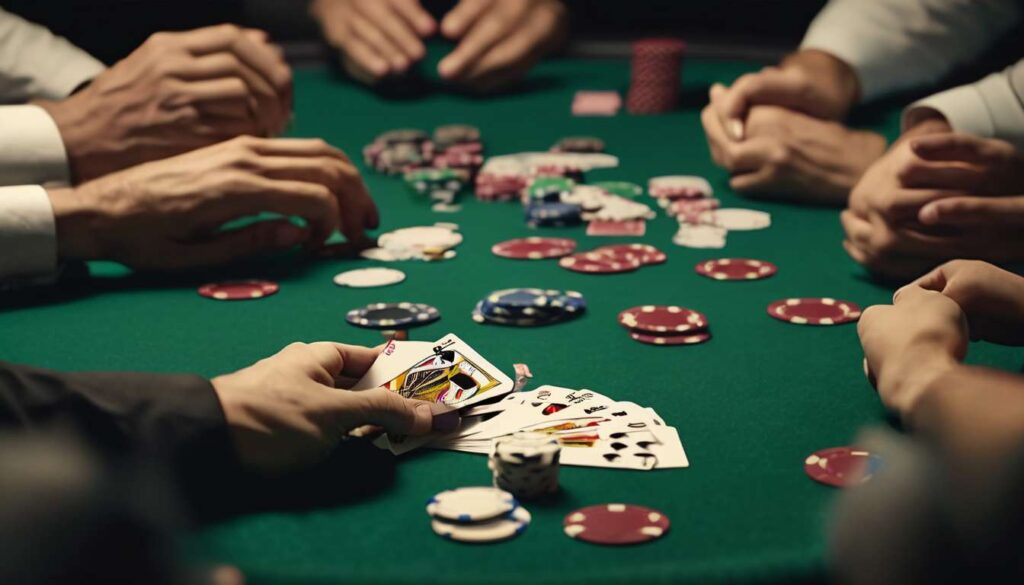
In the vast and intricate world of poker, we often find ourselves navigating the complexities of preflop strategy with a mix of caution and curiosity. As a community of poker enthusiasts and strategists, we recognize the importance of understanding preflop ranges not just as rigid guidelines but as flexible tools that enhance our decision-making process at the table.
Our aim with this article is to explore seven innovative preflop range ideas that are educational, offering insights that can elevate our game without being prescriptive. These concepts are designed to foster a deeper comprehension of the dynamics at play before the flop, enabling us to adapt and thrive in various situations.
By sharing these ideas, we hope to inspire new perspectives and encourage each of us to refine our approach, ultimately leading to more informed and confident gameplay.
Let’s delve into these strategies together and expand our collective poker prowess.
Understanding the Concept of Range
Understanding the Concept of Range in Poker
In poker, understanding the concept of range is crucial because it allows us to anticipate the variety of hands our opponents might hold. By grasping this, we can make more informed decisions that align us with a community of skilled players who think strategically.
Player’s Range
A player’s range isn’t just about specific cards; it’s about predicting the spectrum of possible hands they could play based on their position at the table.
-
Early Position: Our range is typically tighter because there are many players left to act.
-
Later Positions: Our range can expand, allowing us to play a wider variety of hands.
This adaptability in our approach helps us stay unpredictable and competitive.
Strategic Adaptation
Understanding ranges is about more than just our own hand; it’s about recognizing patterns in others. By adapting our strategy according to position and observed behaviors, we integrate ourselves into a poker community that values insight and shared learning.
Leveraging Positional Advantage
Leveraging Positional Advantage in Poker
When we leverage our positional advantage in poker, we can make more informed decisions and potentially exploit our opponents’ weaknesses. Position allows us to see how others act before we make our move, giving us the upper hand.
By understanding our range and how it shifts based on our seat at the table, we can adapt our strategy to maximize our potential gains and minimize risks.
Early Position Strategy:
- Play a tighter range.
- We act before most players and lack information about their hands.
Late Position Strategy:
- Expand our range.
- Take advantage of the insights gained from others’ actions.
This adaptation is crucial for creating a sense of belonging at the table, as it aligns our strategy with the dynamics of the game.
Overall Benefits:
By recognizing and exploiting our positional advantage, we become more adept players, feeling connected and engaged with the poker community.
Incorporating Player Tendencies
Understanding player tendencies allows us to tailor our strategy to exploit specific behaviors and increase our chances of success. When we identify a player’s tendencies, we can adjust our range and make informed decisions based on their style.
-
If an opponent is overly aggressive, we might tighten our range, waiting for stronger hands to maximize value.
-
Conversely, against passive players, we can widen our range, seizing opportunities to pressure them.
Position plays a crucial role in this adaptation process. When we’re in a late position, we have the advantage of observing our opponents’ actions before making our decision. This allows us to refine our strategy and exploit any predictable patterns we notice.
For instance, if we notice a player frequently folding to raises, we can adapt by widening our range and increasing our aggression.
By understanding and incorporating player tendencies, we become part of a community of strategic thinkers, exploiting nuances with precision and enhancing our collective poker experience.
Balancing Value and Bluffs
Balancing value and bluffs in our preflop range enhances our strategy by keeping opponents guessing and maximizing our potential gains. By mixing strong hands with carefully selected bluffs, we present a dynamic playstyle that’s difficult to read.
Position at the table plays a crucial role in constructing this range:
-
Early Position:
- Lean more towards value hands.
- Face more players after us, hence the need for stronger hands.
-
Late Position:
- Include more bluffs.
- Exploit opportunities to steal blinds and apply pressure.
Adaptation is our key tool in refining this balance. We observe how our opponents respond to our plays and adjust our range accordingly:
-
If opponents fold too often:
- Increase bluffing frequency.
-
If opponents call more frequently:
- Tighten up with stronger value hands.
By constantly adapting, we maintain an edge over our opponents. This approach fosters a sense of camaraderie among fellow players who appreciate strategic depth.
Adapting to Table Dynamics
Recognizing shifts in table dynamics allows us to adjust our strategy effectively to maintain an advantage. As a community of players, we understand that poker isn’t static—it’s a game that constantly evolves with each hand.
Our ability to adapt depends on observing how our opponents play and making strategic adjustments to our range and position.
Adjusting Strategy Based on Table Dynamics:
-
When the table becomes more aggressive:
- Tighten your range.
- Choose stronger hands to combat the shift.
-
If the table is passive:
- Expand your range.
- Seize opportunities to take control.
Position plays a crucial role in our adaptation strategy. Being aware of our position at the table helps us decide when to open up our range or when to play more conservatively.
By staying aware and agile, we can navigate the changing dynamics and ensure we’re not left behind.
Together, we enhance our collective skill set and foster an environment where smart, adaptable play thrives.
Exploiting Fold Equity Opportunities
Exploiting fold equity opportunities allows us to capitalize on opponents’ tendencies to fold under pressure, enhancing our profitability in the game.
Key Concepts for Exploiting Fold Equity:
-
Understanding Range and Position:
- By understanding our range and the importance of position, we can strategically apply pressure and force opponents into difficult decisions.
- When we’re in a strong position, our ability to project strength increases, making it more likely for opponents to fold their weaker hands.
-
Collective Knowledge and Experience:
- This creates an environment where we thrive together, as we harness collective knowledge and experiences to outmaneuver our opponents.
Adaptation and Strategy Adjustment:
-
Recognizing When Opponents Fold:
- Adaptation is key in recognizing when our opponents are more prone to folding.
- By observing their behavior and adjusting our strategy accordingly, we can exploit these tendencies effectively.
-
Strategic Bluffing:
- If we notice that players are folding more often to aggressive plays, we should widen our range and seize the opportunity to bluff strategically.
Community and Continuous Learning:
- Embracing these moments strengthens our community of players who continuously learn and evolve, ensuring we stay ahead in the competitive landscape of poker.
Implementing Mixed Strategy Approaches
Incorporating mixed strategy approaches into our gameplay allows us to remain unpredictable and adaptable against diverse opponent styles. By utilizing a varied Range and adjusting based on Position, we can effectively keep our opponents guessing.
This strategy isn’t just about randomizing our actions; it’s about thoughtful Adaptation to the changing dynamics at the table. When we mix our approaches, we create an environment where opponents can’t easily put us on a specific hand, making it difficult for them to exploit our patterns.
In practice, this means:
- Sometimes raising with hands we might usually fold.
- Calling with hands we might typically raise.
This unpredictability, particularly when considering our Position at the table, keeps our strategy fluid and dynamic.
As a community of players striving for improvement, embracing mixed strategies enhances our collective game, fostering a sense of belonging through shared growth and learning. Together, we can explore the depths of strategy and continually refine our skills.
Embracing Continuous Learning
We must constantly seek new knowledge and insights to stay ahead in the ever-evolving world of poker strategy. As a community of players eager to excel, we understand the importance of continuous learning.
Our approach to preflop ranges is never static. We adapt according to position and table dynamics, ensuring we’re not left behind in this competitive game.
In poker, embracing adaptation isn’t just an option—it’s a necessity. Whether we’re playing from an early or late position, our range must reflect the latest strategies and insights.
By sharing experiences and insights with one another, we create a supportive environment where everyone benefits. Together, we refine our understanding of when and how to adjust our range effectively.
Let’s commit to learning from every session, study group, and discussion. By doing so, we strengthen our strategies and reinforce our sense of belonging in this vibrant poker community, where every new piece of knowledge brings us closer together.
How do you adjust your preflop range when playing in a tournament versus a cash game?
Tournament vs. Cash Game Preflop Range Adjustments
When playing in a tournament, we tend to adjust our preflop range more conservatively. This is primarily due to:
- Increasing blinds: As the tournament progresses, the blinds increase, necessitating a more conservative approach to preserve our chip stack.
- Payout structure: The potential for significant monetary rewards influences a cautious strategy to ensure survival and progression.
In contrast, in cash games, we might play a bit looser because:
- There are no escalating blinds, allowing for a more aggressive strategy without the pressure of increasing costs per hand.
Factors to Consider for Preflop Adjustments:
-
Chip Stack Size:
- A large stack may allow for more aggressive play, while a short stack often requires tighter play.
-
Table Dynamics:
- Understanding whether the table is playing aggressively or passively can influence our range.
-
Opponents’ Tendencies:
- Adjusting our range based on the playing style of opponents can provide a strategic advantage.
By considering these elements, players can make informed decisions on how to adjust their preflop range effectively in different poker formats.
What are the psychological factors that can influence your decision-making with preflop ranges?
When considering preflop ranges, psychological factors can greatly influence our decision-making.
Emotions such as:
- Fear
- Overconfidence
- Tilt
can impact our range selection. It’s essential to stay mindful of how these feelings might cloud our judgment and lead to suboptimal choices.
By maintaining:
- A balanced mindset
- Awareness of our mental state
we can make more rational and strategic decisions when choosing our preflop ranges.
How can technology or software tools assist in developing and optimizing preflop ranges?
Technology and software tools play a crucial role in developing and optimizing preflop ranges.
These tools provide us with valuable data insights by allowing us to:
- Analyze hand histories
- Simulate different scenarios
- Identify strategic adjustments
By leveraging these resources, we can:
- Enhance our understanding of preflop ranges
- Make more informed decisions at the poker table
Overall, the use of technology enables us to refine our strategies and improve our gameplay.
Conclusion
In conclusion, mastering preflop ranges involves a dynamic blend of strategic thinking and adaptability.
By considering factors like:
- position,
- player tendencies,
- table dynamics,
you can craft a well-rounded approach that maximizes your chances of success.
Key strategies include:
- Balancing value hands with bluffs.
- Exploiting fold equity opportunities.
- Staying open to continuous learning.
With practice and dedication, you can elevate your game to new heights and outmaneuver your opponents at the poker table.